[Y Insight] A Path Even Major Corporations Failed… Korea's First LFP Cell Manufacturer, Remplir
 https://www.thelec.kr/news/articleView.html?idxno=40078
|
Simultaneous Production of Prismatic and Pouch Types...Pursuing US Market Entry by Internalizing Materials
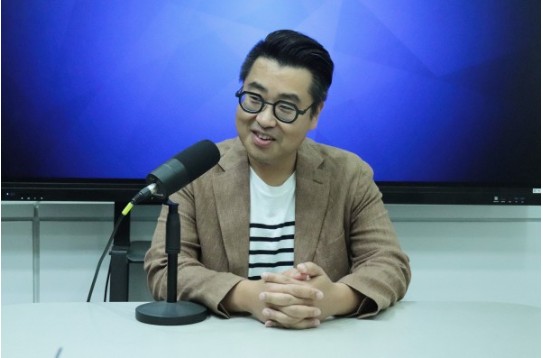
Kim Su-jin, CEO of Remplir [Photo = Han Ji-young]
Remplir, meaning "full and solid" in French, is a cell manufacturer that combines battery R&D and manufacturing. Founded in 2019, Remplir is a rare company in Korea that produces both pouch and prismatic batteries. Prismatic LFP (lithium iron phosphate) batteries are a key focus, solidifying their differentiated position.
CEO Kim explained, "Currently, 80-90% of our sales come from LFP batteries." He added, "While LFP batteries have a lower energy density than ternary batteries, their high ignition stability makes them highly valuable for applications such as commercial vehicles, heavy equipment, agricultural machinery, and ships." The prismatic batteries currently being produced at the Hwaseong plant come in three capacities: 100Ah, 200Ah, and 300Ah, targeting commercial trucks, forklifts, and heavy equipment.
The Hwaseong plant currently has a capacity of 100MWh, capable of producing approximately 150,000 cells annually. CEO Kim stated, "Converted into sales, it's approximately 25 billion won, and we're conservatively targeting 10.2 billion won this year." Actual sales are expected to begin in earnest in the second half of the year. While last year's sales were limited to 1 billion won due to plant construction, a rebound is expected this year, driven by demand for ESS (Energy Storage Systems).
Remplir is particularly focusing on the "electrification conversion" market. He explained, "There are 1.8 million aging 1-ton diesel trucks operating in Korea alone." He added, "In line with the government's Ministry of Environment project, a conversion market is emerging where existing engines are removed and motors and batteries are installed." Similar demand is also occurring for forklifts and logistics vehicles, and the company is focusing on securing initial references.
Remplir is scheduled to break ground on a 1.5GWh plant in Daegu next year. CEO Kim stated, "We are targeting an investment of approximately 60 billion won, and based on our year-end sales performance, we plan to attract large-scale investment in April next year." This plant will be a dedicated ESS production base, focusing on producing large-capacity batteries exceeding 300Ah. Long-term plans include internalizing materials and entering the US market. CEO Kim stated, "Starting next year, we will operate a 3,000-ton pilot plant for LFP cathode materials to meet our own needs. We will also build a large-scale 10GWh plant in the US to target the global ESS and data center markets." He concluded, "The battery market cannot be monopolized by a single company. The coexistence of diverse companies is essential to reducing our dependence on China. I hope to see more companies like Remplir emerge."
- What does the company name Remplir mean?
- What is the company's main business? "We research and develop batteries, and we manufacture them. Therefore, you can think of us as a cell manufacturer. We currently produce pouch-type drone batteries, while also mass-producing prismatic LFP (LiFePO4, lithium iron phosphate) batteries. We're pursuing a dual-track strategy."
- Are pouch-type batteries also LFP?
- When was your company founded?
- Is LFP the majority of your current production? "LFP accounts for 80-90%, while pouch-type batteries account for around 10%."
- Could you briefly explain the differences between LFP and ternary batteries?
- You mentioned a high proportion of LFP. Do you source all the materials externally and manufacture the cells? Or, since you initially entered the LFP materials business, do you manufacture or mix them yourself? "LFP holds a significant symbolic value as we were the first to begin production in Korea, so we place a high priority on the domestic production rate. Most key components, such as separators, electrolytes, and aluminum foil, have already been domestically produced. Currently, the domestic production rate for materials has exceeded 60%, and we are working to increase this further. However, we are still procuring LFP, the cathode material, from China. Starting in 2026, we plan to build a materials plant with an annual capacity of 3,000 tons to be used for our own consumption."
- So you plan to manufacture the material yourself and incorporate it into Remplir battery cells?
- What technologies are required to implement the precursorless process? "While various technologies are involved, the precursor-less process offers several advantages. First, it can significantly reduce factory costs, simplify the process, and maintain a compact plant size. Furthermore, it eliminates wastewater, providing environmental benefits. These are the reasons we chose to pursue the precursor-less process."
- Normally, precursors are used to create materials, but does the precursor-less process simply mix the raw materials together to create the material?
- Is the precursor-less process a universal technology, or is it unique to Remplir? "Actually, it's hard to say it's a particularly difficult technology. It's just that we have accumulated know-how over a long period of time, and it's a technology that Chinese companies are also using. However, we started in 2017, so I think we were probably the first to try it."
- Are you referring to production-related know-how?
- Could you tell us about your company's production facilities?
- Aren't the companies that manufacture battery cells major corporations like Samsung, LG, and SK? There are many cases of companies that have attempted to enter the cell business in challenging market conditions and encountered difficulties. I'm sure many of you are asking whether it's difficult and costly for a startup founded in 2019 to enter cell manufacturing. Is that really the case? "That's right. Cell manufacturing is expensive. That's why we've been working hard for five years to secure the initial capital, and with the help of our investments and self-funding, we were able to build a factory in Hwaseong. We view this market not as a short-term market, but as a necessary direction. Ternary batteries and LFP each have their own distinct roles and needs. However, given the recent shift in global demand toward LFP, we felt it was essential to respond domestically as well. Indeed, I've consistently emphasized the need for LFP in Korea since 2019. The Korean market has been dominated by ternary batteries, making it difficult to attract investment. Fortunately, the LFP market has recently begun to open up. Although China dominates the market, there's a growing trend in the US and Europe to exclude China. Given this situation, we took on the challenge of establishing a domestic company focused on LFP. We felt it was crucial to take on the challenge, even if it meant taking on the challenge."
- Is LFP battery manufacturing more challenging than the existing ternary battery process? Can large domestic ternary battery manufacturers easily produce LFP, or does it require additional experience and expertise?
- When did you build the 100MWh line in Hwaseong? "We prepared for about eight months and completed construction in April of this year. Currently, we are producing prismatic batteries in three types: 100 amps, 200 amps, and 300 amps. The 100 amps and 200 amps have already received KC certification, and the 300 amps are scheduled to receive certification in September."
- What applications are these products primarily used for?
- Where are the 100 amps used?
- So they're used in all areas except EVs? "That's right. LFP has utility in all fields. Its fire resistance makes it safe to use. In particular, LFP tends to be preferred over NCM in the ship and aircraft sectors. While EVs are a market we will eventually enter, we plan to first target markets like commercial vehicles, heavy equipment, agricultural machinery, and carts."
- If we convert a production capacity of around 100MWh into sales, how much does it translate into? - Where are you currently selling your products? "The prismatic battery recently received KC certification, and samples are currently being supplied to application companies for testing. Most of the supply has been for forklifts and commercial trucks." - Where are forklifts primarily manufactured? However, this is a new market, and our focus is on replacement demand. Diesel commercial trucks have already reached the end of production, and new models are also shifting primarily to LPG. However, there are still a significant number of aging diesel vehicles in Korea. For example, there are approximately 1.8 million aging 1-ton Bongo trucks from Hyundai and Kia alone, and electrification projects targeting these vehicles are beginning in earnest."
- Are there any projects that, rather than scrapping aging diesel vehicles, would involve removing the existing engines and retrofitting them with motors and batteries to convert them into electric vehicles? "That project has begun, and the market is quite large. As I mentioned, there are 1.8 million old vehicles, so even if we acquire just 100,000 of them, it's a decent market."
- Is that project being carried out by someone receiving a government grant?
- This isn't just about scrapping, is it?
- Is Remplir's strategy to participate in that project and build a track record?
- What is the exact capacity of the gigawatt-class plant you mentioned earlier? "It's 1.5 gigawatts."
- With a scale 15 times that of the existing 100-megawatt plant, this plan must assume significant demand. Where do you anticipate that much battery demand will come from?
- What was your sales last year?
- Was all of last year's 1 billion won in sales sample sales?
- Were these not samples of products to be sold by Remplir, but rather specific batteries manufactured upon request? "Yes. The services we've been conducting so far have been a kind of foundry, carrying out various types of customized battery development, from electrode manufacturing to battery pack assembly and cell production."
- What is your projected revenue for this year?
- Will most of this year's revenue come from the electrification of older vehicles?
- I understand there are quite a few ESS companies in the US. Which companies primarily supply ESS products? "It's true that there are many related companies in the US. And Korea has also enacted legislation related to ESS. Starting November 28th, solar and ESS installations will be mandatory in all public parking lots nationwide. There's a huge demand generated by this, and many companies are trying to take advantage of this market. We are also collaborating with various companies and providing products."
- Will sales of around 10 billion won result in a profit?
- How many employees do you have?
- How much investment have you received so far?
- Will building a gigawatt-class plant in Daegu require significant funding? "We need a lot of work. That's why we're contacting several companies."
- How much additional funding do you need?
- Potential investors and industry insiders may raise concerns that expanding directly from a 100-megawatt plant to a gigawatt plant is too drastic an investment. What is your view on this?
- What are your specific plans? For example, I assume you have a timeline for finalizing funding, breaking ground, and completing and mass producing the plant.
- You mentioned earlier that you plan to produce LFP cathode materials, right? "We're considering internalizing our cathode materials. We can't rely on external suppliers, and we have our own technology, so we're pursuing in-house production. However, LFP doesn't use a single material; it utilizes a mixture of various types. Therefore, it's difficult to say that we're using 100% of our own materials. There are many companies in China that produce materials with high energy density and excellent formability, so we can appropriately mix these materials with ours. We believe that this approach will significantly enhance our cost-effectiveness, and we are currently using it that way."
- So, do you already have facilities to produce the materials?
- You mentioned that you're planning to build a factory next year. Does the 60 billion won required for that include investment in LFP cathode materials?
- Where will the cathode material factory be built? And how large will it be? "We're planning to build it in Daegu, and the annual production capacity is around 3,000 tons, so you could consider it a pilot project. I don't think it's going to be a very large scale. We're starting with this scale for now and aiming to consume all of the production ourselves."
- The battery market doesn't look good these days. What are your thoughts? "I believe the battery market is ultimately destined for growth. With the rapid rise of unmanned automation, most trucks in China and Europe are transitioning to driverless systems. To achieve unmanned operation, electrification is essential, and batteries must evolve to automatic replacement or removable structures. China is already moving quickly in this area, and we have much to learn from them. I also believe that Korea will inevitably face changes in its current system, and whether it takes five or ten years, we will ultimately move in that direction. Therefore, I believe demand for batteries will steadily increase, but the specific form of development will depend on market conditions."
- Is Remplir currently competing directly with major global cell manufacturers, or is its strategy focused on finding and dominating niche markets? "It's difficult for us to compete head-on with global conglomerates. While large corporations focus on mass production of a small variety of products, we specialize in small-batch, multi-variety production. In fact, many small and medium-sized enterprises (SMEs) cannot obtain batteries from large corporations, and as a result, they import significant quantities from China as well as domestically. We prioritize these small-batch customers. While large corporations supply large quantities to large-scale ESS and automakers, we cater to the diverse needs of small businesses. We believe this market is sufficiently large, even in the trillions of won range."
- Large corporations benefit from reduced production complexity through mass production of a small variety of products. Conversely, wouldn't pursuing small-batch, multi-variety production significantly complicate production management and operations? "Of course, small-volume production of a wide variety of products carries its own complexities, but the basic form type is fixed. Since we also operate prismatic batteries in three sizes, we can differentiate between high-power versions for commercial trucks and low-power versions for heavy equipment. Accordingly, we can adjust electrode composition, mixing methods, and coating conditions to suit the specific situation, allowing us to respond flexibly without significant difficulties."
- While production and shipment management are complex, selling a variety of products in small quantities requires a strong sales network and marketing strategy. How are your sales and marketing efforts currently being managed?
- Shouldn't we establish some sort of distribution system? "It may be in the future, but I don't think so yet."
- Are the drone batteries you mentioned intended for general commercial drones, or are you also considering defense drones?
- I'm curious about your long-term vision and roadmap. What size and direction do you expect or plan for Remplir to grow into in five or ten years? "We have consistently pursued research and development. While we started with LFP, we've already secured years of development achievements in various materials fields, enabling us to quickly respond to emerging markets, such as sodium or all-solid-state batteries. Therefore, our most important goal is to produce batteries that meet market demands. The Hwaseong plant is currently in its initial stages, and we believe the gigawatt-class Daegu plant, scheduled to begin construction next year, will be a turning point. Once the Daegu plant is operating stably, we expect sales to reach approximately 30 billion won. Five years later, we plan to expand to a two-track system by adding another 1.5 GWh plant. In the long term, we are also considering entering the US market. We are currently discussing the possibility of building a large-scale plant with a capacity of over 10 GWh there."
- Will you maintain your strategy of producing a wide variety of small quantities in the long term? "Our strategy of producing a wide variety of products in small quantities is tailored to our current scale, but expanding into ESS will change the landscape. Demand for ESS and data centers is expected to grow significantly in the future, and there will undoubtedly be a large-scale market where large corporations are entering. At the same time, a diverse market for small-scale ESS, such as those for residential and industrial use, will also emerge, so we plan to focus on entering this segment."
- So why did you choose Daegu? "Our headquarters are in Daegu, and we've received a lot of support from the city. TIPS (Tech Incubator Program for Startup Korea) was also selected in Daegu, and most major investment firms are based in Daegu. Daegu boasts a well-established industrial infrastructure, and it's home to materials companies like L&F and various equipment industries. However, there was still no battery cell manufacturer, so there was a significant need at the regional level, and our needs aligned, leading us to establish a factory in Daegu."
- Are there any companies you consider competitors to Remplir?
Interview : Han Joo-yeop, Staff Reporter, Lee Su-hwan Professional Reporter
Source: The Elec, a media outlet specializing in electronic components (http://www.thelec.kr)
|