'Exploiting Gaps in China' Remplir Targets LFP Battery Market for Specialty Equipment
 https://www.thelec.kr/news/articleView.html?idxno=53246
|
| Wins InterBattery 2026 Award with LFP Prismatic Battery
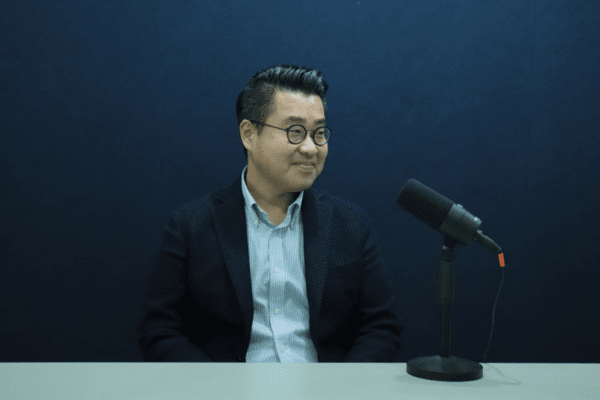
[Kim Su-jin, CEO of Remplir. (Photo: The Elec)]
Battery startup Remplir is targeting the electrification market, including heavy equipment and agricultural machinery, by leveraging its Lithium Iron Phosphate (LFP)-based prismatic batteries. Through a strategy of customized cell design for specific applications, the company is penetrating niche markets previously dominated by Chinese batteries. In response to growing demand, it is also pursuing the construction of a 1.2-gigawatt-hour (GWh) battery factory.
Remplir received the InterBattery Award at InterBattery 2026 for its LFP prismatic battery products. The InterBattery Award is selected based on an evaluation of technological achievement, innovation, and marketability among the products of participating companies. Instead of supplying off-the-shelf products, Remplir employs a customization strategy that involves redesigning from the electrode design stage. It applies 340-ampere-hour (Ah) batteries for Energy Storage Systems (ESS) and 230-Ah products for high-output equipment such as heavy machinery and agricultural machinery. "We customize cell designs to suit markets undergoing electrification transitions, such as heavy equipment, agricultural machinery, and ships," said Kim Su-jin, CEO of Remplir.
The company operates a prismatic battery cell production line in Hwaseong, Gyeonggi Province. Cell production began last year, and module and pack manufacturing has been underway since January of this year. The production line is currently operating at full capacity. To expand production capacity, the company is pursuing the construction of a battery factory with a capacity of approximately 1.2 GWh in the Gyeonggi region. The new factory will focus on producing LFP prismatic batteries, and plans include installing production facilities for drone batteries on some of the lines. Remplir has focused on the industrial equipment electrification market rather than the electric vehicle market. Heavy equipment, agricultural machinery, forklifts, and golf carts have traditionally used diesel engines and lead-acid batteries, but are recently transitioning to lithium batteries. This market has historically had a high proportion of Chinese-made batteries. However, with the recent combination of rising prices and reduced supply in China, there is a growing demand for domestically produced batteries.
- Hello. This is Lee Su-hwan from The Elec. Ahead of InterBattery 2026, the largest battery exhibition in Korea, we are introducing the companies receiving awards at InterBattery. This marks the third time these awards have been presented, following those in 2024 and 2025. Joining us is CEO Kim Su-jin of Remplir, one of the award-winning companies. Hello. → Hello.
- Could you briefly share your thoughts on receiving the award? → Yes, we are Remplir Co., Ltd. For many years, we have been directly manufacturing and conducting research and development on secondary batteries. I believe we received this prestigious award because the government, various local authorities, and numerous companies took notice of us and recognized the excellence of our products. We will continue to dedicate ourselves to achieving even better results in the future to repay you all.
- As you are well aware, InterBattery is celebrating its 14th anniversary this year. Approximately 690 companies are participating from March 11th to 14th. The InterBattery Awards is a battery technology and product awards ceremony that selects products from participating companies that possess outstanding technical capabilities, innovation, and marketability. As this is the third edition, I understand there were quite a few formidable candidates. Could you briefly introduce the product that won this award? → The product that won this award is also our flagship item. We were the first in Korea to start producing Lithium Iron Phosphate (LFP) batteries. However, the form factor is not that of a standard off-the-shelf product, but a customized one. Since many companies have diverse requirements, we believe we received high marks for our ability to produce products tailored to the right application through customized designs—for example, 340 amperes for ESS applications, or 230 amperes for high-output products like heavy equipment or agricultural machinery. We currently produce about five types of Lithium Iron Phosphate batteries. Although they are all LFP batteries, their performance, lifespan, and various characteristics differ significantly.
- At InterBattery, LFP batteries were already a major topic of discussion last year and the year before. It seems difficult to deny that LFP batteries are the global trend. Of course, not all batteries are LFP, but I think viewers are curious about this. There are three major domestic battery manufacturers, and the fact that Remplir, which produces LFP batteries in Korea, received an award can be attributed not only to the quality of the product but also to the fact that it created its own market. In which markets is it primarily being applied? → While the three major domestic companies have focused on ternary batteries with a focus on the EV market and electric vehicles over the years, we have focused on other markets from the very beginning. These are markets transitioning from diesel or internal combustion engines to electrification, such as buses, ships, aircraft, heavy equipment, and agricultural machinery. Since the three major conglomerates had not yet entered this market in earnest, we identified it as a niche market and entered it. At that time, Chinese batteries held nearly 100% market share, but coinciding with the global movement to exclude Chinese batteries, we determined that we could grow this market.
- Based on your explanation, it seems your strategy was aimed at the commercial vehicle market, and the three major conglomerates may have judged it to be relatively small in scale. → In reality, while the three domestic companies focused on the EV market—electric vehicles—over the past period and concentrated on ternary batteries for those vehicles due to the rapid growth of that market, we began by focusing on external markets from the very start. That is to say, there are markets such as buses, ships, aircraft, heavy equipment, and agricultural machinery, particularly those undergoing a transition to electrification. The diesel and internal combustion markets are shifting to electrification, riding the wave of electrification. Since the three major conglomerates had not yet entered this market, we considered it a niche market and decided to enter. The timing of our entry coincided with a period when Chinese batteries held nearly 100% market share. Consequently, as our situation aligned with a global movement to exclude Chinese batteries, I believe they entered with the belief that they could significantly expand this market.
- As you mentioned, considering the commercial market and the commercial vehicle market, it is a specialized market, and since the scale is relatively small for the three major battery companies to enter, → You can view it that way.
- When we talk about commercial vehicles, it includes buses and trucks, but also things like forklifts and agricultural machinery. If you could tell me some application examples, I think I would understand it more concretely. What are some examples? → One example is the heavy equipment market. In the heavy equipment sector, diesel is currently entering a phase of near-discontinuation.
- Even 1-ton trucks have switched from diesel to LPG, haven't they? → That is correct. They are being released in two types : electrified and LPI. The same applies to heavy equipment. Previously, lead-acid batteries were used in electrification, and the market operated in parallel with diesel; however, diesel is now facing discontinuation, and a market to replace lead-acid batteries with lithium-ion batteries is opening up.
- So it was lead-acid batteries. → That is correct. In a market where diesel was once the mainstream, diesel is now being discontinued, and a market is beginning in earnest where lead-acid batteries are being replaced by secondary batteries, specifically lithium batteries.
- From what you've said, it seems like a similar trend to the power tool market. Power tools used nickel-hydrogen batteries in the past, and before that, nickel-cadmium batteries, but have now completely transitioned to lithium-ion. I've also heard that most underground parking lot cleaning equipment has used lead-acid batteries. So, it seems you are targeting that market. → In the past, lead-acid batteries were also dominant in the golf cart market. However, Europe is moving toward completely excluding lead-acid batteries by 2030, and a transition period began in 2025. Accordingly, a gradual transition to secondary batteries is taking place in that market as well.
- What I'm curious about further is this : you mentioned LFP batteries, the prismatic type, right? Are these products actually being used in the niche markets you mentioned, such as forklifts and trucks? → Yes, they are being used. If you visit our booth at InterBattery, you can see the actual battery packs used in heavy equipment in person. This is possible because we manufacture the battery packs ourselves. We also manufacture the battery packs used in golf carts.
- Then, I must ask you another question : where and when did you start production? → We established a production line in Hwaseong, Gyeonggi-do last year and began full-scale production of prismatic cells. The pack manufacturing line started operations early this year. We have been directly manufacturing modules and packs using batteries produced since January.
- So, you produce the cells, modules, and packs yourself as well? → That is correct. Since high-voltage products of 100 amperes or more and 100 volts or higher require specific qualifications, we utilize outsourcing for some parts. However, we are able to manufacture 76.8-volt products, primarily used in heavy equipment, and 48-volt products for golf carts in-house.
- What is the operating rate and order status of the Hwaseong factory? → Currently, we are operating at full capacity. Demand continues in the golf cart, heavy equipment, and agricultural machinery sectors, and recently, demand for marine applications has also emerged. The ESS market in Korea is showing signs of gradually expanding starting this year, and there is also demand in overseas markets with poor power infrastructure, such as Mongolia, Southeast Asia, and Eastern Europe, so we are proceeding with supply after producing samples.
- You mentioned that your cells and packs are currently operating at 100% capacity. What is the size of your order backlog? → As a new company, we are currently focusing on securing references. We are prioritizing sample production while gradually expanding our contracts. Until last year, Chinese batteries dominated the domestic market, but recently, the price of Chinese batteries has risen by approximately 50%. At the same time, the volume of batteries imported into the country has also decreased significantly.
- What is the reason for the decrease in import volume? → Last year, as competition among battery manufacturers intensified in China, the industry underwent restructuring, leading to a decrease in production volume. Additionally, the rapid growth of the Chinese ESS market increased local demand, resulting in a battery shortage. Consequently, the volume of batteries entering the domestic market decreased, and we are currently benefiting from this situation.
- If demand increases, new investments and the expansion of production lines will be necessary. What are your latest plans? → To meet the growing demand, we are preparing to construct a gigawatt-hour (GWh) plant in the Gyeonggi-do region.
- While hundreds of gigawatt-hours are being discussed in the battery industry recently, megawatt-hours were the standard in the past. 1.2 GWh is not a small scale ; when do you expect to break ground on the plant? → Our goal is to begin construction this year. We are currently in discussions with multiple investors regarding this matter.
- Will the production of LFP prismatic batteries for ESS also take place at this gigawatt-hour plant? → Our main focus is on LFP. However, with the recent rapid growth of the drone market, the demand for drone batteries cannot be ignored. Since drones utilize pouch-type batteries rather than prismatic ones, along with ternary or LCO-based cathode materials, we plan to install pouch-type production facilities on some lines within our Gigafactory.
- Although the product that received this award is an LFP prismatic battery, you mentioned that you also produce batteries for drones. Please explain this business. → Currently, China dominates the global market for drone batteries. However, due to war issues and the increasing demand for firefighting and industrial drones, there has been a movement to reduce dependence on specific countries. While related demand is also growing domestically, there are almost no companies producing drone battery packs. Since our inception, we have accumulated manufacturing and design know-how by conducting a foundry business based on pouch-type batteries, and based on this foundation, we have launched full-scale production of drone batteries. Samples are currently being produced and supplied to overseas markets, including Europe.
- You mentioned the foundry business. I am curious if foundry production is possible for external orders in addition to products designed and manufactured in-house. → We conducted some foundry production until last year. However, as we are currently focusing on LFP prismatic batteries and batteries for drones, our foundry business has been suspended.
- Do you have any plans to run the foundry business in parallel at the Giga Plant in the future? → We proceed with investment in the Giga Plant only after pre-selecting customers. Therefore, we plan to focus on supplying the produced volume to those designated customers.
- You have recently been jointly developing forklift battery packs with Wooju Solution. Please explain this project. → There are three major companies in the domestic forklift market.
- Which companies are they? → They are Clark, HD Hyundai, and Doosan Bobcat. These companies have previously used Chinese-made battery packs. However, concerns about dependence on Chinese products have grown, and there is an increasing demand for non-Chinese batteries when entering overseas markets. Accordingly, the need to supply domestically produced battery packs is expanding, and we are responding to this market.
- It appears that major forklift manufacturers such as Doosan Bobcat, HD Hyundai, and Clark are making moves to replace Chinese-made batteries. When did these changes begin in earnest? → I believe they began in earnest last year. The price of Chinese batteries coincided with supply instability issues.
- Is this due to rising prices and procurement uncertainty? → As issues such as delivery delays and defects occurred, the demand for a stable supply chain grew. The fact that domestic companies can provide prompt after-sales service and technical support also played a role. This is influencing the expansion of demand for domestically produced batteries. In the agricultural machinery sector as well, we are currently making contact, primarily with overseas companies.
- What are other major demand sources where LFP prismatic batteries can be applied? → The ESS market. While the three major domestic companies lead the large-scale ESS market, there are still opportunities in the small and medium-sized markets, such as residential ESS, small business use, and charger applications. We are targeting these sectors with products that reflect our own designs and concepts.
- What are the differentiated strengths of Rumplier's LFP prismatic batteries? → Chinese batteries are primarily off-the-shelf products. They operate on a structure where fixed products are used as is. In contrast, we proceed from the electrode design stage to tailor the design to the specific application field. We proceed with customized designs by subdividing into high-output, low-output, and low-capacity types according to requirements, such as for heavy equipment, ESS, and UPS. This can be described as a multi-product, small-batch production structure.
- Designing packs for specialized markets, such as the forklift battery pack currently being jointly developed with Wooju Solution, is highly challenging. What difficulties have you experienced while directly producing modules and packs? → The reason we directly produce modules and packs is that battery cells alone do not constitute a finished product. The BMS is a core component. Since last year, the issue of BMS backdoors has come to the forefront. There are concerns that information could be leaked externally through the BMS. We design, produce, and assemble the BMS domestically. This is to ensure stability. However, customer specifications are very diverse. Requests to add functions occur continuously. Customers demand new features to differentiate themselves. Consequently, we must frequently modify the BMS design and tuning. The design difficulty is high. The physical difficulty of the pack assembly process itself is relatively low.
- Chinese companies supply products primarily based on off-the-shelf. It is not easy to respond immediately to demands for customized BMS designs. In particular, due to the mass production structure, accepting small-batch customized orders is realistically difficult. → Customer requirements continue to increase. Requests to add specific features are repeated. We must incorporate new features to differentiate ourselves. Consequently, BMS design changes and tuning work occur frequently. While the design difficulty is high, the physical process difficulty of the pack assembly itself is not significant.
- Understood. Once again, congratulations on winning the InterBattery 2026 Award. We look forward to inviting you back in the future as the domestic LFP battery market expands. Thank you.
Source: THE ELEC (https://www.thelec.kr) / Reporter Kim Eun-kyu (giddk1206@thelec.kr) |